
How Much Does a Loft Conversion Cost in Luton? What to Expect
A loft conversion is one of the most effective ways to add space to your Luton home without building outward, losing garden, or navigating the cost and complexity of a ground floor extension. The space is already there above your head — unused roof void that could become a bedroom, bathroom, home office, or whatever room your household needs most. Converting it adds a genuine extra floor to your property, increases its value, and solves the space problem that prompted you to start looking at options in the first place.
But before you commit, you need to understand what it’s going to cost and what drives the price. Loft conversion costs vary significantly depending on the type of conversion your roof requires, the size of the finished room, whether you’re including an ensuite, and the structural work needed to make it happen. This guide sets out realistic figures for different types of conversion across Luton, explains what affects the price at each stage, and helps you budget with confidence before talking to builders.
Velux Conversions
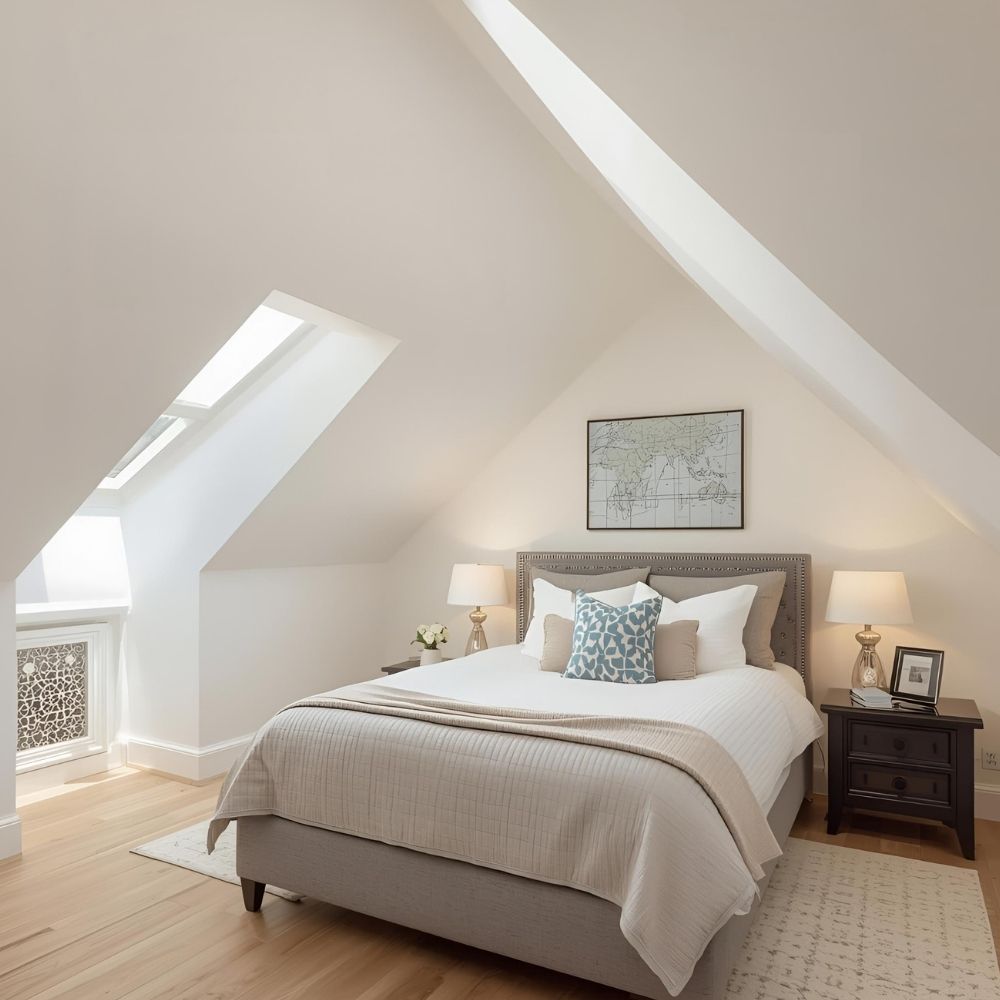
A Velux conversion is the simplest and most affordable option. The existing roof structure stays as it is — no dormers, no gable extensions, no change to the external appearance of the property. Natural light comes from Velux roof windows installed into the existing slope, and the interior is fitted out with a strengthened floor, insulation, a new staircase, electrics, plastering, and decoration.
The essential requirement is adequate existing headroom — roughly 2.2 metres from the ceiling joists to the ridge. Many of Luton’s detached and semi-detached properties — particularly across the established housing in Stopsley, Putteridge, and Round Green — have roof spaces with sufficient height for a Velux conversion.
A Velux loft conversion in Luton typically costs between £20,000 and £32,000. A straightforward bedroom conversion with roof windows and basic finishing sits at the lower end. Adding an ensuite shower room, upgraded flooring, and higher-specification finishing pushes toward the upper end. Without an ensuite, most Velux conversions locally fall between £20,000 and £27,000.
The main advantages are cost and speed — a Velux conversion is the cheapest type and typically completes in four to six weeks. The limitation is usable space — the sloping ceiling on both sides means full standing height only exists near the ridge, with the floor area tapering toward the eaves.
Rear Dormer Conversions
A rear dormer extends the roof outward at the back of the property, creating a flat-roofed structure that dramatically increases both the usable floor area and the headroom. Where a Velux conversion confines you to the space under the existing slope, a dormer provides vertical walls and a flat ceiling across the extended section — making the room feel like a proper additional floor rather than a converted attic.
Full-width rear dormers are the most popular loft conversion type across Luton because they deliver the best balance of cost and usable space. A full-width dormer spanning the entire back elevation transforms the loft into one spacious room with consistent headroom throughout.
A rear dormer conversion in Luton typically costs between £28,000 and £48,000. A modest dormer covering part of the rear roof slope with a simple bedroom sits at the lower end. A full-width dormer creating a spacious master bedroom with a well-specified ensuite bathroom reaches the upper end. Most three bedroom semis across Luton converting with a rear dormer and ensuite fall between £32,000 and £45,000.
Most rear dormers proceed under permitted development without planning permission, provided they meet the standard conditions — the dormer doesn’t extend beyond the plane of the existing roof slope facing the highway, the volume doesn’t exceed 40 cubic metres for terraced houses or 50 cubic metres for detached and semi-detached, and the materials match the existing roof.
Hip-to-Gable Conversions
Many semi-detached houses across Luton — particularly the inter-war and post-war housing across Biscot, Limbury, Leagrave, and the established streets around Wardown Park — have hipped roofs where the side slopes inward rather than meeting a vertical gable wall. This hip significantly reduces the usable loft space because the sloping side eats into the floor area.
A hip-to-gable conversion extends the side wall vertically up to the ridge line, replacing the sloping hip with a flat gable end and reclaiming the space that was lost inside the roof. Combined with a rear dormer — the most popular configuration across Luton — a hip-to-gable conversion creates the most spacious possible loft room. The gable provides full headroom across the width while the dormer extends the depth.
A hip-to-gable conversion on its own typically costs between £32,000 and £48,000. Combined with a full-width rear dormer, costs usually fall between £40,000 and £55,000. The additional structural work to rebuild the side wall and modify the roof structure adds cost compared to a simple dormer, but the space gained is substantially greater — often creating a room large enough for a master bedroom, ensuite bathroom, and built-in storage.
What’s Included in These Costs?
A comprehensive loft conversion quote should cover every element needed to deliver a finished, habitable room.
Structural work forms the foundation of every conversion. The existing ceiling joists need upgrading to carry habitable floor loading. Steel beams support the modified roof structure where dormers or gable extensions change the load paths. Party wall fire-stopping between semi-detached or terraced properties ensures Building Regulations compliance.
The staircase connects the new room to the existing landing. Building Regulations require a permanent fixed staircase. The design needs to work within the available space without compromising existing bedrooms. A standard staircase typically costs £2,000 to £4,000 within the overall quote.
Insulation to current Building Regulations goes into the roof slope, dormer walls, gable ends, and any other external surfaces. Electrics cover lighting, sockets, and smoke detection. Plumbing is included if an ensuite is part of the conversion. Plastering, flooring, and decoration complete the interior. Building control fees cover inspections during construction, typically £400 to £700.
What Affects the Cost?
Roof construction type has the biggest impact. Traditional cut roofs with rafters and purlins leave more open space and require less modification. Modern trussed roofs use interlocking trusses that fill the void and need significant steelwork to replace their function. Trussed roof conversions cost more because the engineering is more complex.
Ensuite specification is the most controllable variable. A basic shower room with standard tiling and functional sanitaryware adds £3,500 to £5,500. A higher-specification ensuite with a walk-in shower, large-format tiles, quality fittings, and underfloor heating pushes £6,000 to £12,000. The plumbing infrastructure costs roughly the same regardless — the difference is in the visible fittings and finishes.
Party wall agreements apply to semi-detached and terraced properties where the conversion involves structural work adjacent to the party wall. Surveyor fees typically run £700 to £1,500 per neighbour.
Access and scaffolding affect costs depending on the property. Most dormer and hip-to-gable conversions require scaffolding, and properties on tight plots or with restricted access may incur higher scaffolding charges.
Does It Add Value?
A loft conversion consistently adds more value than it costs to build. Converting a three bedroom house into a four bedroom property with an ensuite changes the home’s market position fundamentally. Estate agents across Luton typically value the additional bedroom and bathroom at £20,000 to £40,000 depending on the property and location — comparing favourably against even the higher end of conversion costs.
The practical value is equally significant. An extra bedroom relieves pressure on existing rooms. An ensuite frees up the family bathroom. A dedicated office in the loft creates separation from household activity. The space was always there — the conversion simply puts it to work.
Getting the Best Value
Get detailed quotes from two or three experienced local builders. Ensure each covers the same scope — structural work, staircase, insulation, electrics, plumbing if applicable, plastering, flooring, decoration, and building control fees. Without consistent scope, comparing prices is meaningless.
Finalise your ensuite specification before requesting quotes. The difference between a basic shower room and a premium bathroom runs to several thousand pounds, and builders quoting different specifications produce prices that aren’t comparable.
Prioritise the structural fundamentals. Quality steelwork, properly strengthened floors, thorough insulation, and compliant fire protection support everything else for decades. Decoration and fixtures are straightforward to upgrade later if budget needs managing now.
If you’re considering a loft conversion at your Luton home, get in touch for a free assessment. We’ll inspect your roof space, discuss your options, check the planning position, and provide a clear, detailed quote so you know exactly what’s involved before you commit.